

Garden Sauna Buying Guide: What to Know Before You Buy
Most buyers realize too late that they've chosen the wrong shape or material for their outdoor sauna. The difference between a sauna you love and one you regret often comes down to a handful of decisions made before the purchase.
This guide covers the seven most important things to consider.
Which Sauna Shape to Choose?
The barrel sauna has become extremely popular in recent years.
Its main advantage is the price, but the curvature of the wall and roof doesn't allow for a second bench level. This means you're stuck with a single seating height, which limits the experience significantly.
Why bench height matters
Hot air rises. The best löyly (steam) is experienced from a higher position. A two-tier bench system lets you choose between intense heat on top and milder warmth below - essential when sharing with guests who have different heat tolerances.
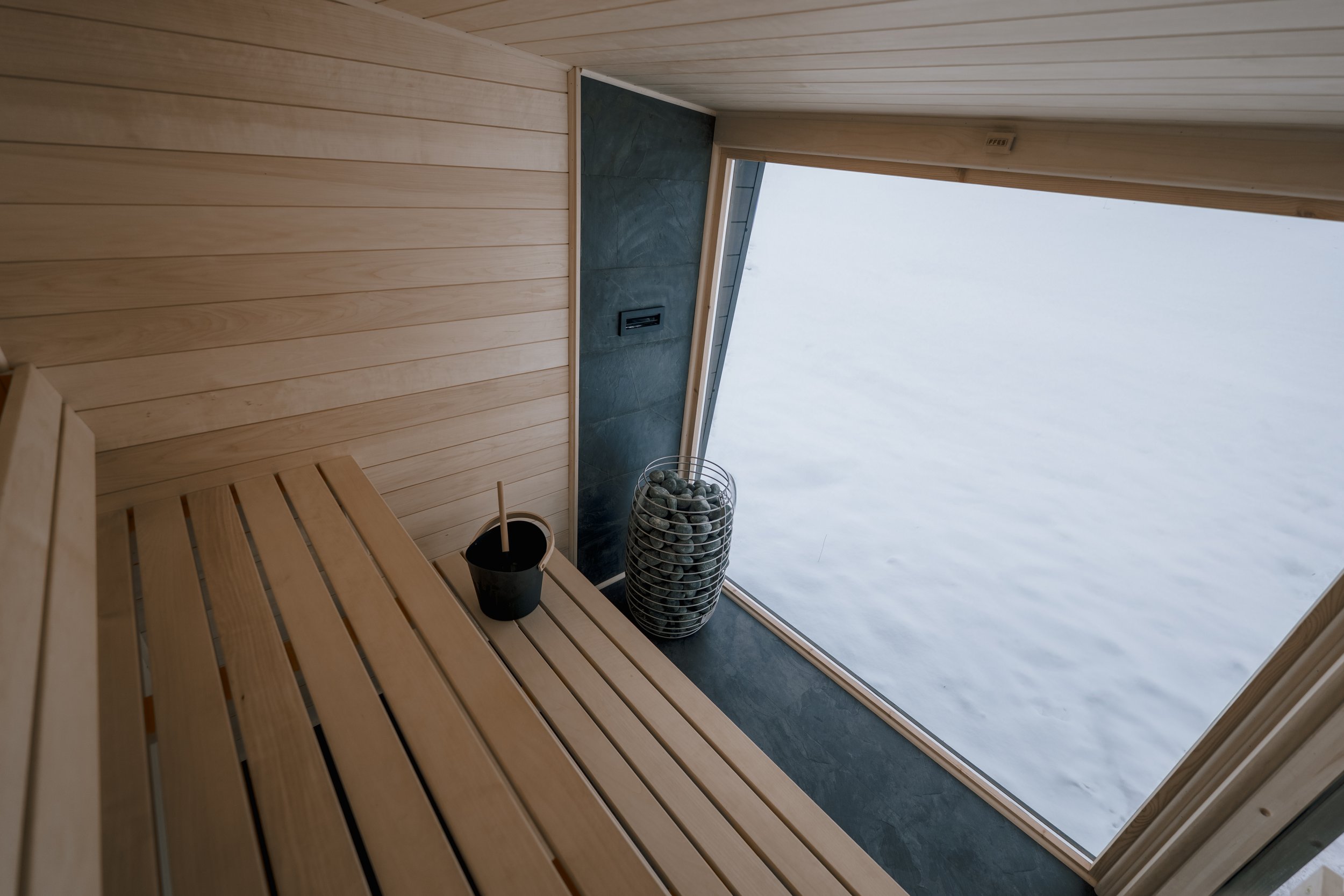
A cube-shaped sauna gives you freedom: two-tier benches, full-height windows, better insulation options, and a real changing room if the model includes one.
Why the Wall Build-Up Matters
A well-built wall leads to faster heating times and lower energy consumption. It's worth investing in a sauna that has one.
170mm
Wall thickness
0.035
W/mK rating
40%
Faster heating
30%
Less energy
Look for mineral wool insulation (rock or glass wool) with a minimum of 100mm thickness. Never buy a sauna that contains styrofoam - it's a fire hazard and breaks down in high-temperature environments.
The wall is the one part of a sauna you cannot inspect once it is delivered, and it is where the largest differences between manufacturers hide. Our guide to sauna wall insulation and construction takes a 70mm solid wood wall apart against a 170mm layered one, layer by layer, with the U-values for both.
Choosing the Right Materials
Your material choices for exterior and interior serve completely different purposes.
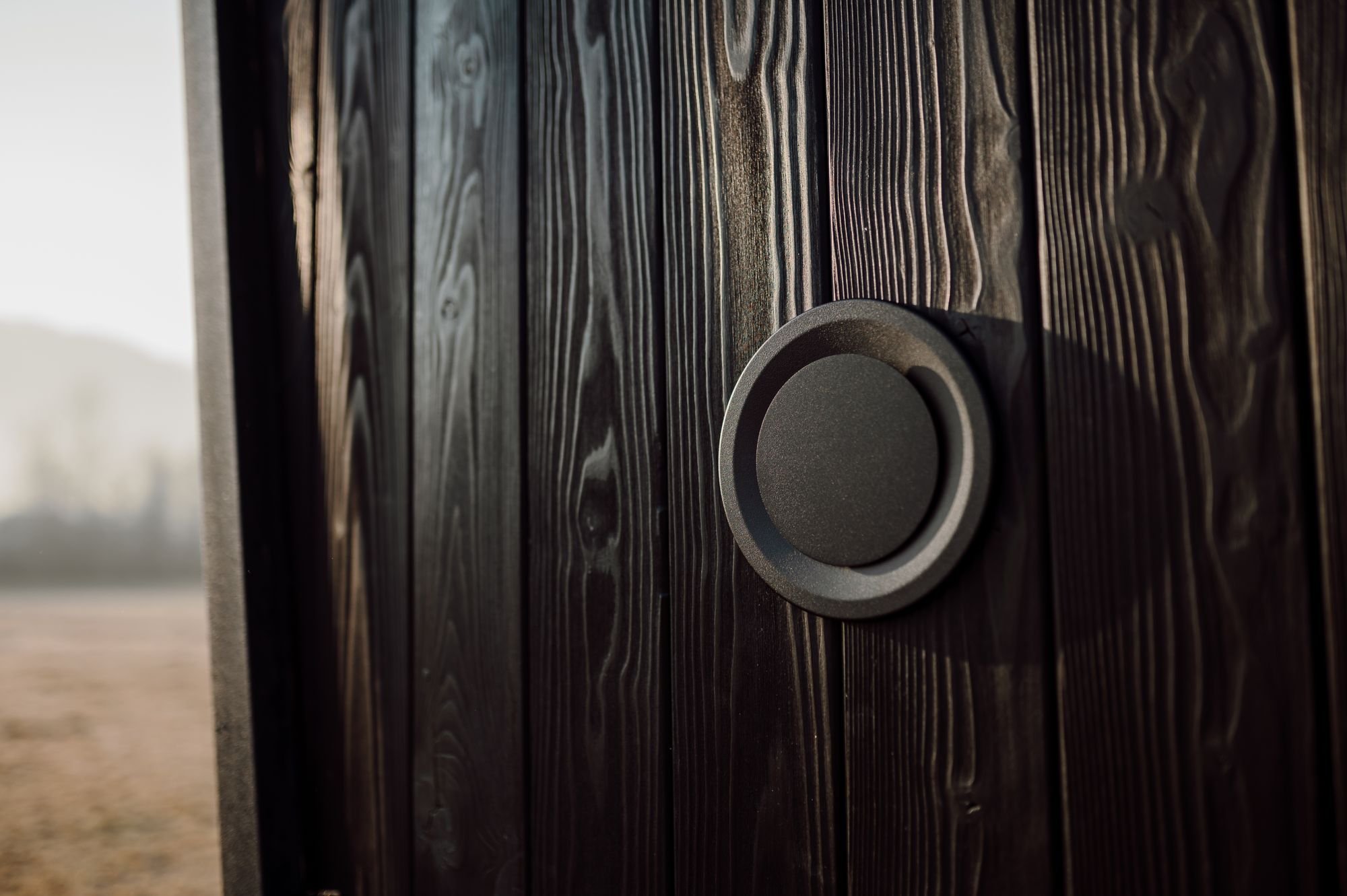
For the exterior, you want weather resistance and aesthetics. Thermally modified timber (like thermo pine or thermo ash) is excellent because the heat treatment process makes the wood dimensionally stable and resistant to rot. Larch is another strong choice - it naturally weathers to a beautiful silver-grey over time.
For the interior, you want low thermal conductivity (so the wood doesn't burn your skin) and minimal resin. Aspen is our top pick - it's soft, stays cool to the touch, and has very few knots. Alder is a close second.
Avoid pine and spruce on interior surfaces
Softwoods like pine and spruce contain resin pockets that can melt and drip at sauna temperatures. They're fine for exterior cladding but should not be used where skin contact occurs.
Ventilation: The Hidden Game-Changer
Most outdoor saunas rely on gravity-based ventilation - a gap near the floor and one near the ceiling. It works, but not well. Temperature stratification (hot at the top, cold at the feet) is a constant problem.
Finnish research from the 1970s established that mechanical ventilation is the gold standard for sauna air quality and comfort.
A mechanical ventilation system with a low-mounted exhaust fan and a properly positioned fresh air intake completely solves this problem. It also maintains better oxygen levels, which makes longer sauna sessions more comfortable.

Featured Model
yukiHeat Technology
Our proprietary ventilation system
Learn More →Electric vs Wood-Burning Heaters
Both have their place. Electric heaters are convenient - WiFi control, precise temperature settings, no chimney maintenance. They're the right choice for most people.
Wood-burning heaters offer a more traditional experience and work off-grid. But they require a chimney, regular cleaning, and you need to manage your wood supply.
Electric: Best for convenience
Quick to heat, precise control, no maintenance. Requires a three-phase electrical connection for larger models (9kW+).
Wood-burning: Best for atmosphere
The crackle of fire, the ritual of building heat. Requires chimney installation, 4m tree clearance above, and regular ash cleaning.
A Sauna on a Steel Frame
Here's something most people don't think about: what happens if you move?
A sauna built on a concrete foundation is permanent. A sauna built on a metal frame can be loaded onto a trailer and taken to your new home. For a significant investment like this, portability is worth considering.

Pre-Built vs Self-Assembly
Kit saunas save money upfront, but they come with hidden costs: your time, potential mistakes, and the risk of improper insulation or ventilation. A manufacturer-assembled sauna arrives ready to use, with quality control handled by professionals who build saunas every day.
Our approach
Every Yuki Sauna is fully assembled in our workshop in the Beskidy Mountains before delivery. We can send you an approval video before shipping so you can see your exact sauna before it leaves.
If you're considering an outdoor sauna and want guidance on which model fits your space and needs, we're happy to help.