Outdoor Sauna Buying Guide: What to Know Before You Buy
Buying an outdoor sauna is a big decision. Most people buy a sauna once in their life, and this decision should be well-informed. You don't want to regret buying the wrong thing just because it was cheaper or you couldn't find anything else. In this article,
I'll cover the most important factors:
sauna shape
insulation
materials
ventilation
heater type
portability
assembly
so you can choose the best outdoor sauna for your needs.
Shape - Barrel vs Cube, Which Sauna Shape is Best?
The shape of the sauna is important, because it determines the internal layout. Saunas generally fall into two categories: barrel shape and cube shape.
Barrel-shaped outdoor saunas, with the cylinder lying on its side, are not an optimal choice. Because the bench level is usually in the widest part, the curvature of the wall and roof doesn't allow for a second bench level. This means that the sauna experience is not going to be great. The reason many people go for a barrel-shaped sauna is because it's cheaper to make — you can build it with only planks of timber, secured with a metal outer ring.
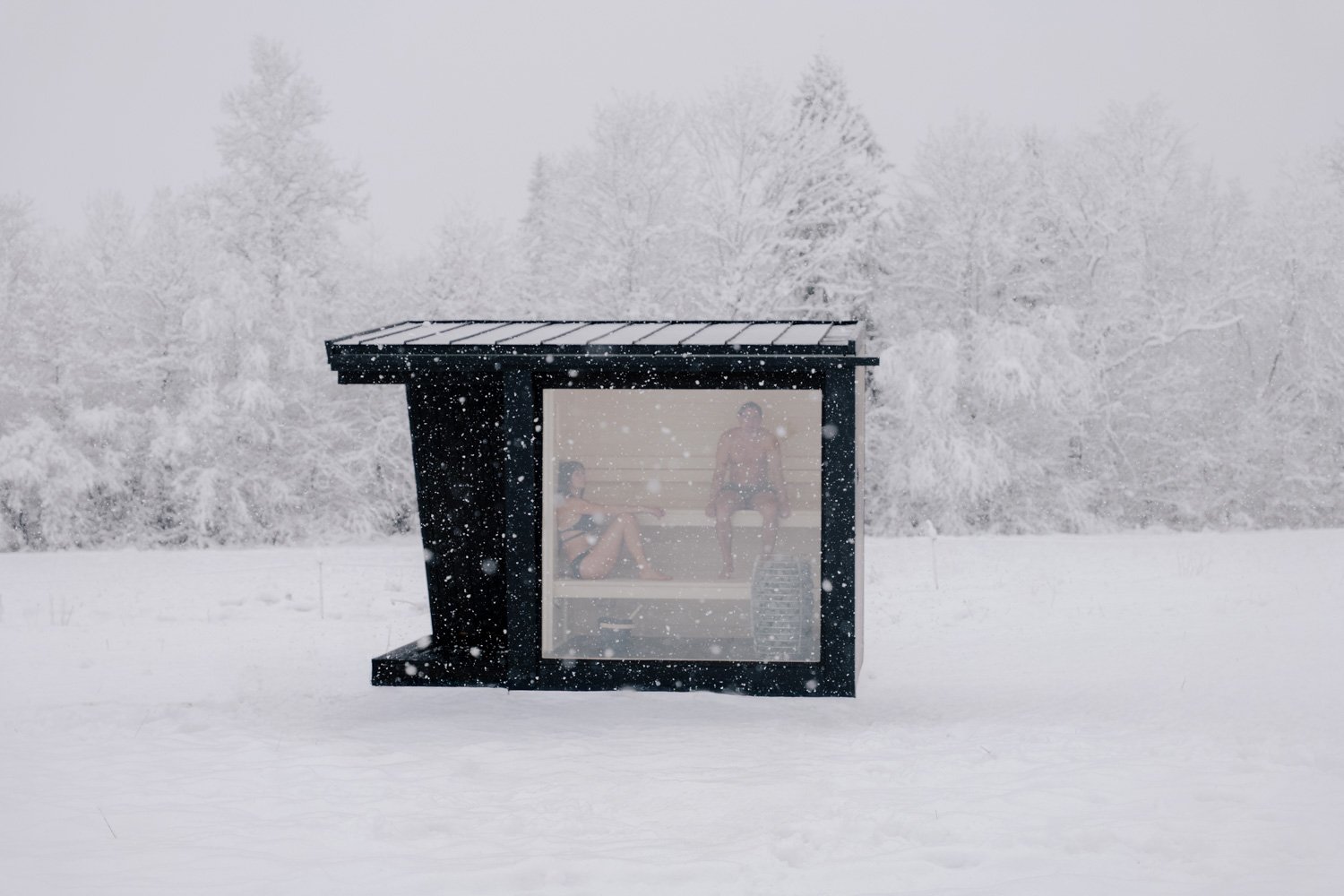
A much better alternative is a cube-shaped sauna, also known as a cabin sauna. A cube design allows for better materials and advanced construction techniques. It is not limited by curved walls — you can design the inside to have 2 or 3 bench levels. It really gives you many more possibilities and you can make it fit your needs.
Why Outdoor Sauna Insulation Matters (and What to Avoid)
Insulation is key to keeping the heat in. It makes your outdoor sauna perform much better over its lifetime. It is a small percentage of the overall cost, and it is 100% worth having. It will pay back dividends over the whole life of your sauna. That means faster heat-up, lower wood/electric consumption, and more stable temperature.
Again — with a barrel-shaped sauna, you can't add insulation because of the way the walls are built. With a cube shape, you can.
The best materials for sauna insulation are mineral wool, cellulose, or sheep's wool. Never ever accept a sauna that uses polyurethane foam as insulation. This material doesn't breathe and can cause harmful off-gassing.
Materials for an Outdoor Sauna
Many outdoor sauna builders save on materials. The bulk of the cost of a sauna comes from external and internal panelling.
External panelling is exposed to rain, snow, cold, heat and UV rays. It’s a harsh environment for timber. This is why timber should be of higher quality. It should also be well protected chemically, or thermally treated.
Examples of cheap materials are pine and spruce. They are softwoods that grow quickly but are not very durable. However, if thermally treated, their durability improves significantly. Thermally modified pine is one of those "miracle materials," and I assure you, it's not an ad. We actually use it in Yuki Sauna and are super happy with it. Good timber for the exterior is Larch or any other wood that has been thermally modified or treated.
Internal panelling — this is the material you will see and touch. It should be decent quality, with no knots and low resin content. Again, many builders pick cheaper wood species like pine or spruce. I strongly recommend getting something better, like aspen, lime, alder, abachi, or any of those in a thermally modified version.

Sauna Ventilation: Gravity vs. Mechanical
Ventilation is essential to an authentic outdoor sauna experience. Fresh air comes in, and stale air goes out. This is the absolute minimum that a sauna should have. Many builders now have a basic version of ventilation, with an intake opening under the heater and an exhaust near the ceiling on the opposite side of the sauna.
This is fine, but there is a better way to do it. Based on Finnish research from the 1970s, the best way to ventilate a sauna is to use mechanical ventilation. The intake should be about 1/3 of the way up from the top of the heater to the ceiling, and the exhaust should be on the opposite side of the sauna, close to the heater and fitted with a mechanical fan.
This setup provides fresh air consistently, independent of atmospheric air pressure. It also provides better heat distribution inside. The fresh air is pre-warmed by the heater just after coming in, then it circulates around the sauna, and as it cools down it falls to the floor where it is then pulled outside by a silent fan. If you want to read more, check out our article about YukiHeat ventilation.

Sauna Heater Choice: Wood vs. Electric
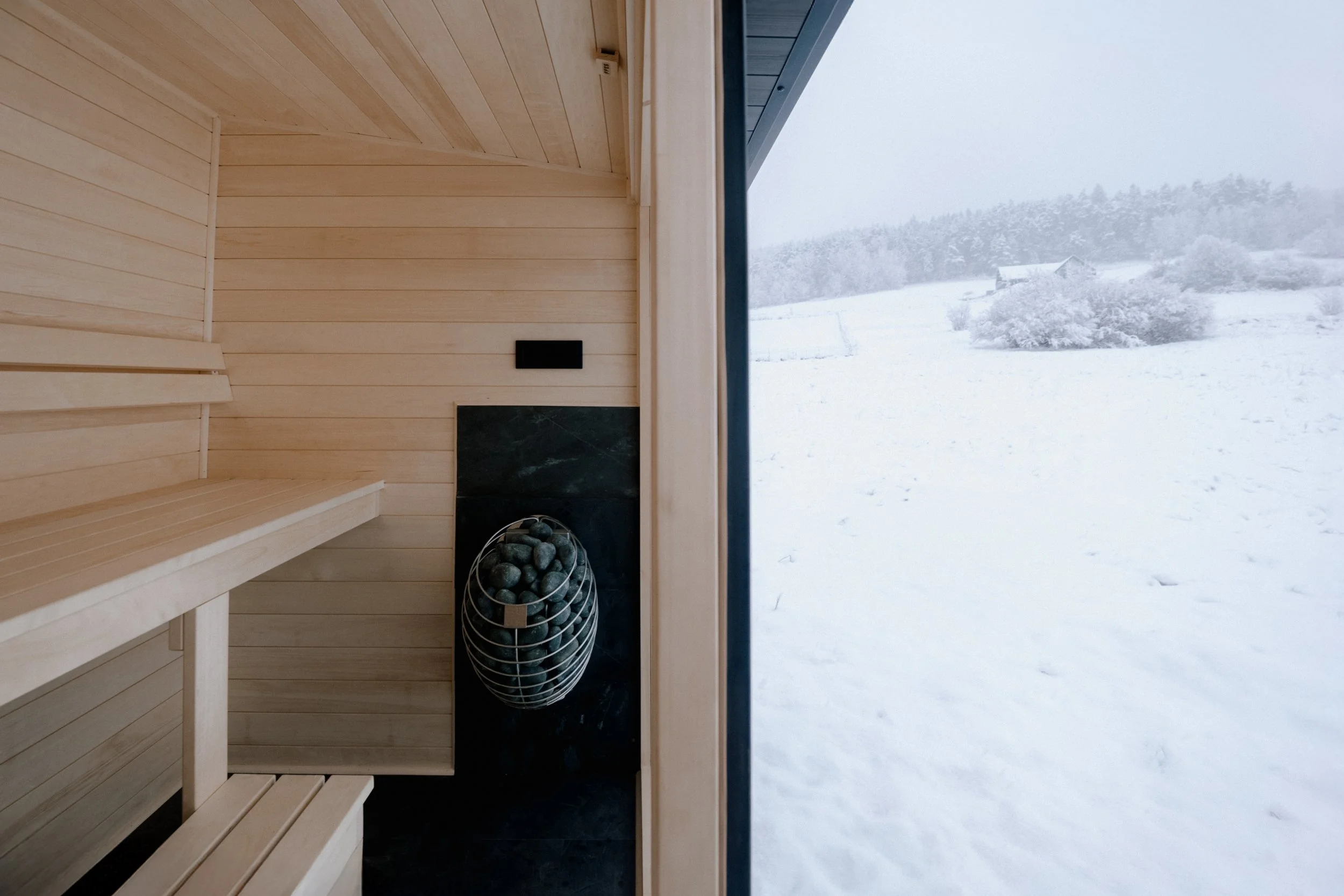
This is a big topic, often debated among outdoor sauna owners. In short: electric heaters are clean and convenient but require a proper electrical connection. Wood heaters take slightly more effort to run, but have a special charm to them, and don't require any electricity to run — they can be completely off-grid. Electric heaters typically need a 16A or 32A connection, which may require an electrician. Wood heaters need a chimney and proper safety clearances. We will cover this topic in a separate article.
Portable Outdoor Sauna: Why a Metal Floor Frame Matters
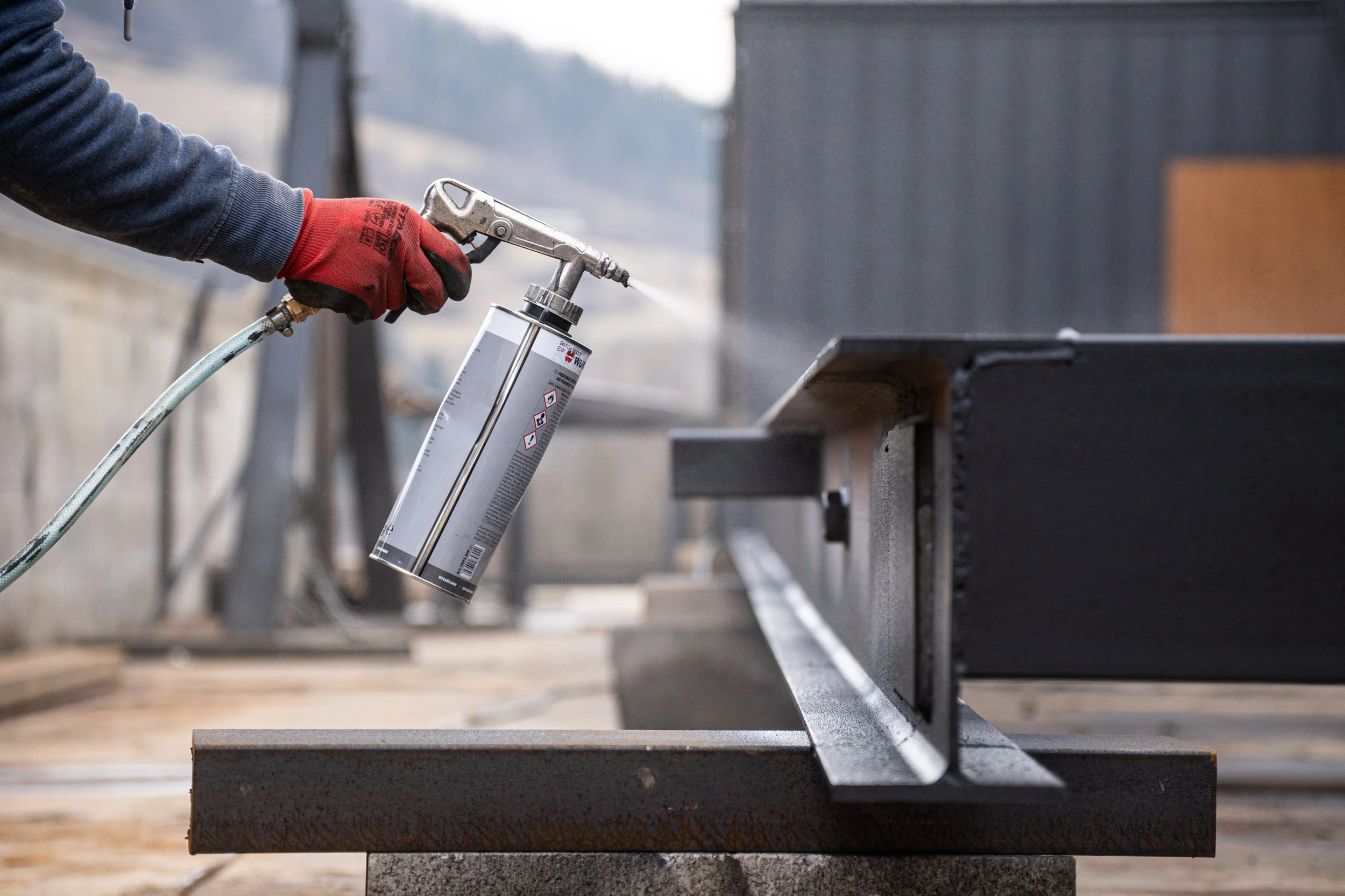
Today, many people move house a couple of times in their life. It's great having an outdoor sauna, but if you want to move to a different city, you shouldn't have to leave it behind. If you invest money in a good outdoor sauna that lasts for years or even decades, it makes sense for it to be portable.
That's why the sauna should have a metal frame — so you can easily lift it up with a crane and transport it to a new location.
At Yuki Sauna, we also have a transportation kit. It’s a wheeled chassis that you bolt under the sauna, and you can tow it with a car or an ATV.
Sauna Kit vs. Pre-Built: Which Is Better?
Many outdoor sauna companies now sell sauna kits. They are especially popular in the USA but now also in Europe. Sauna kits are sold because the logistics are easier. You can flat-pack a sauna, ship it on a pallet, and assemble it yourself. It can make the sauna cheaper but that's not always the case. The question is, are you confident in your skills to assemble it?
Personally, I'm more of a fan of having the assembly done by the manufacturer. It's a better choice because the final quality check can be done before the sauna reaches you. It also gives you a hassle-free experience — the final assembly is a matter of just placing the sauna on the foundation and hooking up the electricity.
Conclusion
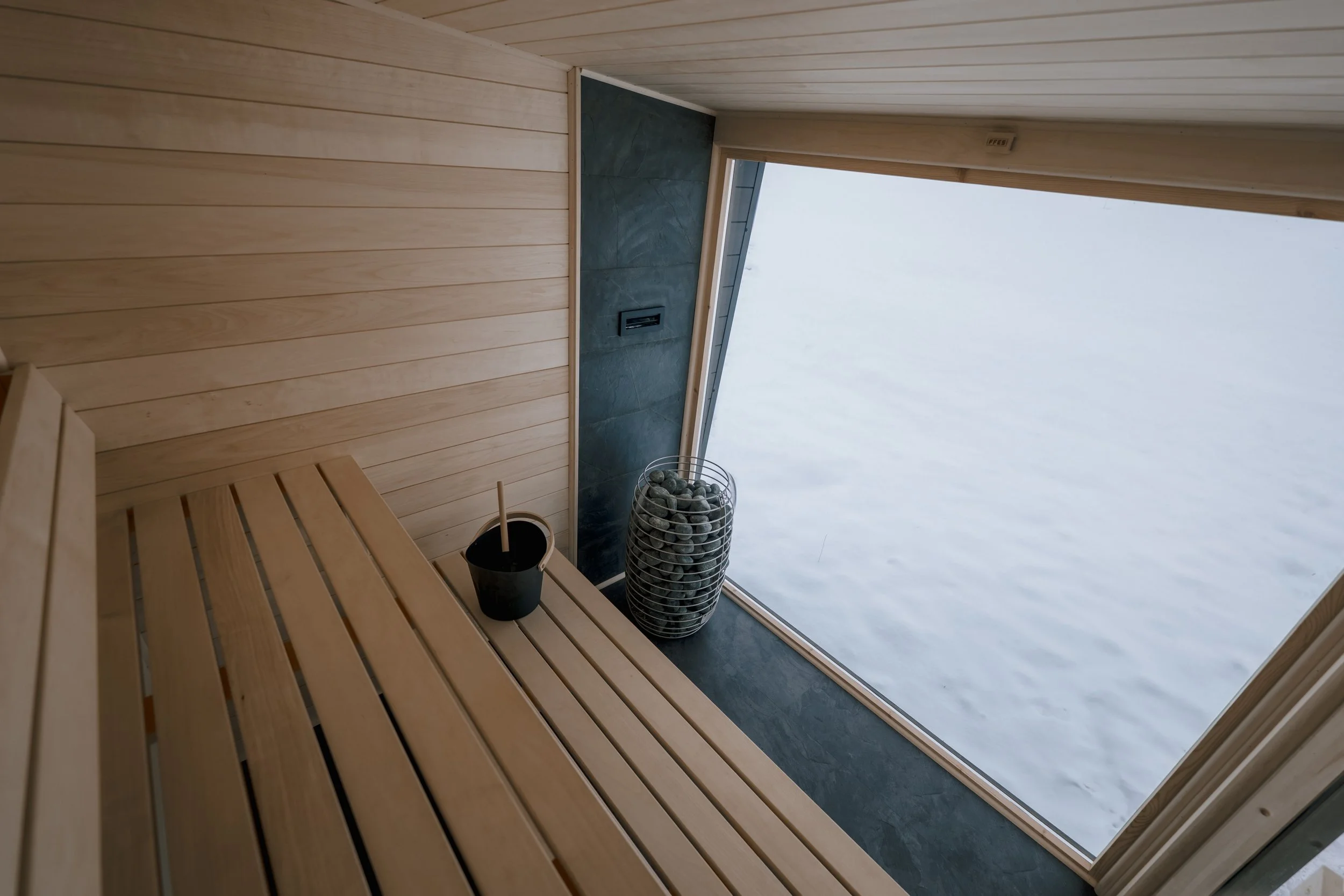
In short: when choosing an outdoor sauna, look for a cube shape, proper insulation, quality materials, mechanical ventilation, the right heater for your lifestyle, and a metal floor frame.
I hope this helps you ask the right questions before buying. If you want a sauna that checks all those boxes, we would be happy to build you one!